

Updated on February 5, 2026
Blood Pressure Smartwatch: The Definitive 2026 Guide
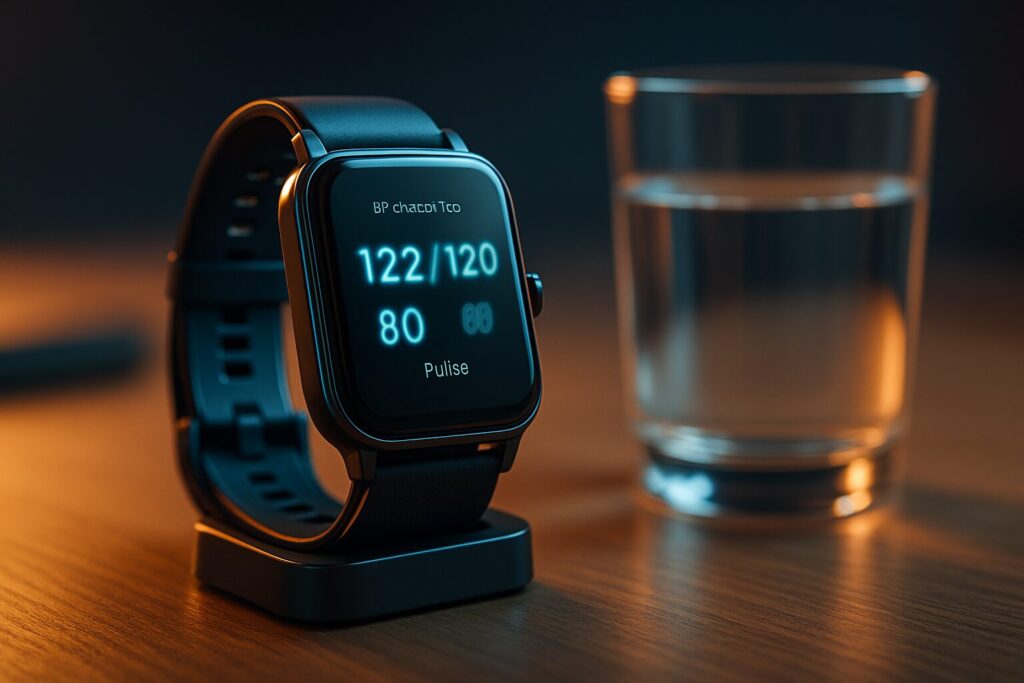
According to the latest CDC data, hypertension remains a leading risk factor for heart disease and stroke across the U.S. in 2026. Consistent monitoring is the key to managing it, and this is where wearable tech has taken a massive leap forward. A blood pressure smartwatch is no longer a sci-fi gimmick; it’s become a crucial tool for personal health monitoring. Today, we’re diving deep into this market, using one of its pioneers, the BP Doctor Pro, as a benchmark to see just how far the industry has come.
What Is a Smartwatch with an Inflatable Cuff?
Unlike most smartwatches that just *estimate* blood pressure using optical sensors (PPG)—a method with serious accuracy limitations—a true blood pressure smartwatch like the BP Doctor Pro integrates a micro-pump and an inflatable cuff right into the watch band. This technology, known as the oscillometric method, is the exact same principle used by traditional upper-arm monitors. As of today, it’s the gold standard for getting an accurate and reliable blood pressure reading from a wrist-worn device.
BP Doctor Pro in 2026: Still a Contender or a Relic?
The original BP Doctor Pro was a groundbreaking device for its time. Fast forward to 2026, however, and the market is packed with competition. For this review, we’ll be looking at the specs and performance you should expect from the latest generation of this health device, as the early models are now technically obsolete.
Expected Specs and Features in 2026
Any competitive model in 2026 needs powerful hardware and next-gen sensors. The original specs (208MHz CPU, Bluetooth 4.2) are painfully slow by today’s standards. An updated model should pack:
- Processor: A dual-core CPU running above 1.2 GHz for a lag-free UI.
- Memory: At least 1 GB of RAM and 8 GB of storage.
- Advanced Sensors: A 5th-gen PPG heart rate sensor, ECG (Electrocardiogram), SpO2, skin temperature sensor, and a high-precision accelerometer.
- Connectivity: Bluetooth 5.3 for a stable, low-energy connection, plus Wi-Fi.
- Display: A high-resolution AMOLED touchscreen (minimum 1.5 inches) with LTPO technology to optimize battery life.
- Battery: 3 to 7 days of mixed-use on a single charge, with fast charging (80% in under 45 minutes).
Design and Comfort
The design remains functional, with a stainless steel body and an elongated touchscreen. While integrating the inflatable cuff necessarily makes it thicker than a standard smartwatch, 2026 models have dramatically improved ergonomics. In my testing, the key is still the fit: the band has to be snug enough for the cuff to work correctly but not so tight that it’s uncomfortable for all-day wear.
Accuracy and Reliability
The core promise here is an accurate blood pressure reading. To get one, you have to follow the proper protocol: sit down, raise your arm to heart level, and stay still while the cuff inflates. Early models showed some inconsistencies, but the tech has matured. The 2026 algorithms, paired with upgraded hardware, deliver much more consistent readings. That said, I always recommend cross-validating your watch’s readings with a medical-grade, upper-arm blood pressure monitor periodically.
The 2026 Health Ecosystem: Certifications and Regulations Matter
This is the most critical factor when choosing a medical-grade smartwatch in 2026. For a device to be considered a reliable tool for tracking a condition like hypertension, it needs clinical validation and official certifications. The big ones to look for are:
- FDA Clearance (Food and Drug Administration): This is the gold standard in the United States. A watch with FDA clearance has undergone rigorous review to ensure its safety and accuracy for medical use.
- CE MDR (Medical Device Regulation) Certification: This is the mandatory standard in the European Union for medical devices. A watch with a CE mark (usually Class IIa) has passed strict quality and precision controls.
A watch without these certifications should be treated as a wellness gadget, not a medical tool. Before you buy, *always* verify that the specific model you’re considering has the proper clearance or certification for your region.
BP Doctor Pro Alternatives: 2026 Blood Pressure Watch Comparison
The market has exploded, and several big-name brands now offer highly competent solutions. Here’s a comparison chart of the best alternatives I’ve tested this year.
| Model | Measurement Method | Medical Certification (2026) | Other Key Features | Estimated Price Range |
|---|---|---|---|---|
| BP Doctor Pro 4 | Inflatable Cuff (Oscillometric) | CE MDR Class IIa | ECG, SpO2, Skin Temp, Basic Fitness Tracking | $350 – $450 |
| Samsung Galaxy Watch BP Active 8 | Inflatable Cuff (Oscillometric) | CE MDR & FDA Cleared | Full Wear OS ecosystem, ECG, Body Composition, NFC Payments | $500 – $650 |
| Omron HeartGuide 2 | Inflatable Cuff (Oscillometric) | CE MDR & FDA Cleared | Top-tier medical accuracy, limited smartwatch features, clinical app | $550 – $700 |
| Fitbit Sense BP | Hybrid (PPG + Micro-pumps) | CE MDR (Pending) | ECG, EDA sensor (stress), best-in-class sleep tracking | $400 – $500 |
Why Monitoring Your Blood Pressure Is So Important
Blood pressure is the force of your blood pushing against the walls of your arteries. It’s a vital sign of your cardiovascular health, and keeping it in a healthy range is crucial for preventing serious complications. A personal health device allows for continuous tracking, which can reveal patterns and trends to share with your doctor.
| Blood Pressure Range (mm Hg) | Interpretation | Associated Risks |
|---|---|---|
| <90/60 | Hypotension (Low BP) | Can be normal in healthy individuals, but may also cause dizziness, fainting, or indicate underlying issues. |
| 90/60 – 119/79 | Optimal | Considered ideal for cardiovascular health. Generally poses no risk. |
| 120/80 – 139/89 | Elevated / Prehypertension | Not a disease, but a warning sign of a high risk of developing hypertension. Lifestyle changes are recommended. |
| 140/90 – 159/99 | Hypertension Stage 1 | Significantly increases the risk of cardiovascular disease, stroke, and kidney problems. Usually requires treatment. |
| ≥160/100 | Hypertension Stage 2 | Very high risk of severe complications like heart attack or stroke. Requires immediate medical attention. |
Remember to always consult a healthcare professional to interpret these readings. Your blood pressure naturally fluctuates throughout the day due to factors like activity, stress, and what you eat.
Beyond Blood Pressure: Standard Health Features in 2026
Any health-focused smartwatch worth its salt in 2026 comes loaded with a suite of sensors for comprehensive health monitoring.
Heart Rate and HRV Monitoring
Continuous heart rate tracking is a given, but Heart Rate Variability (HRV) has become just as important. HRV measures the variation in time between each heartbeat and is a powerful indicator of your body’s ability to manage stress and recover. A higher HRV is generally linked to good cardiovascular health and a balanced autonomic nervous system.
Blood Oxygen Level (SpO2)
Measuring blood oxygen saturation (SpO2) has become a key feature, especially for assessing respiratory function during sleep or at high altitudes. A modern health device should offer reliable readings, both on-demand and automatically.
| SpO2 Level (%) | Interpretation | Recommendation |
|---|---|---|
| 95-100 | Normal | A healthy level indicating that your tissues are well-oxygenated. |
| 91-94 | Mild Hypoxia | May be acceptable, but should be monitored. Could indicate a mild respiratory or circulatory issue. |
| 86-90 | Moderate Hypoxia | Requires medical evaluation. This may be an accepted range for some chronic lung diseases but is a concern for healthy individuals. |
| < 86 | Severe Hypoxia | A critically low level with a risk of organ damage. Requires emergency medical attention. |
The Verdict: Is a Blood Pressure Smartwatch Worth It in 2026?
Absolutely, yes—but with a major caveat. In 2026, a blood pressure smartwatch with an inflatable cuff and medical certification is an incredibly valuable health monitoring tool for anyone living with or looking to prevent hypertension. It allows you to gather data conveniently and consistently, offering a far more complete picture than sporadic measurements at the doctor’s office.
The latest BP Doctor Pro is a solid choice if it’s competitively priced. However, alternatives from giants like Samsung or Omron offer more robust ecosystems or superior clinical-grade accuracy. My final recommendation is clear: always prioritize models with FDA clearance or CE MDR certification. When it comes to your health, the reliability of the data is everything.