

Last updated: January 29, 2026
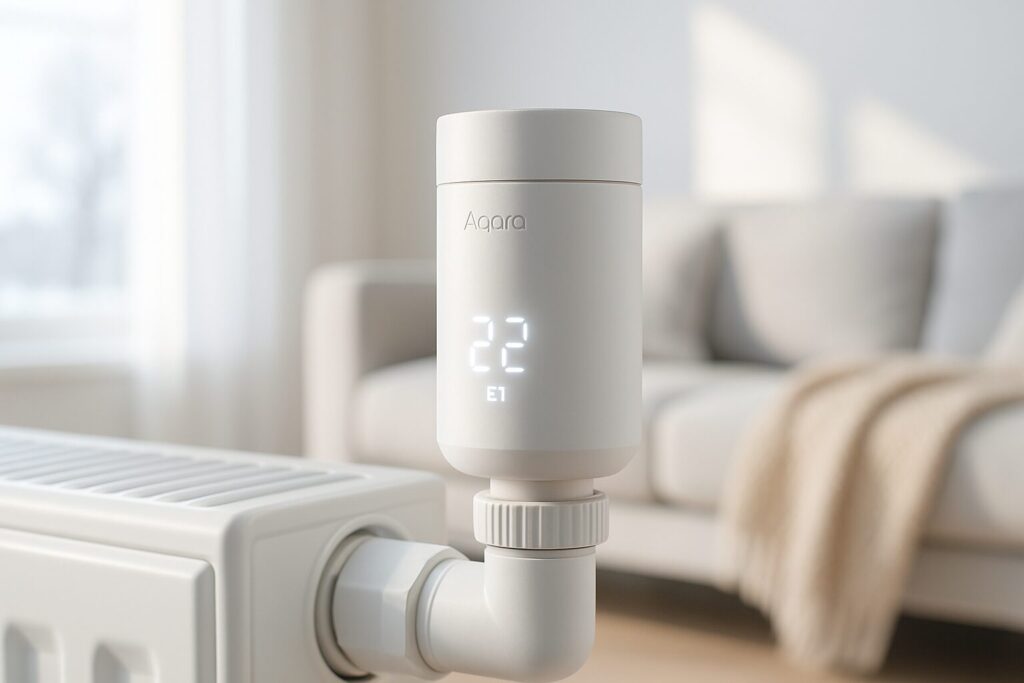
Here in 2026, the smart home isn’t a futuristic promise—it’s just home. In this mature ecosystem, devices like the Aqara Smart Radiator Thermostat E1 remain a cornerstone for savvy homeowners. Years after its release, its perfect balance of function, reliability, and price keeps it one of the smartest buys for anyone looking to optimize their home heating. This updated review explores why the E1 is still a benchmark and how it stacks up against today’s competition.
I’ve tested dozens of smart climate devices, and the Aqara E1 stands out for its simplicity and raw effectiveness. It’s more than just a thermostat; it’s your gateway to true Zigbee radiator automation, giving you room-by-room control that translates directly into comfort and, more importantly, serious energy savings on your heating bill. Its ability to integrate seamlessly into open ecosystems like Home Assistant makes it a favorite for home automation enthusiasts who avoid walled gardens.
Aqara E1: The 2026 Pros and Cons
Before we dive into the nitty-gritty, here’s the quick and dirty breakdown of the Aqara E1’s strengths and weaknesses today.
✅ Pros
| ❌ Cons
|
Deep Dive: Aqara E1 Key Features
Design and Tech Specs
The Aqara E1 sports a functional, minimalist design. Its white plastic cylindrical body (Ø 2.24 x 3.5 inches) houses a backlit LCD screen that clearly displays the current temperature. The main control is a rotating ring that lets you adjust the temperature manually with a precise and satisfying tactile feel—a welcome feature when your phone isn’t handy.
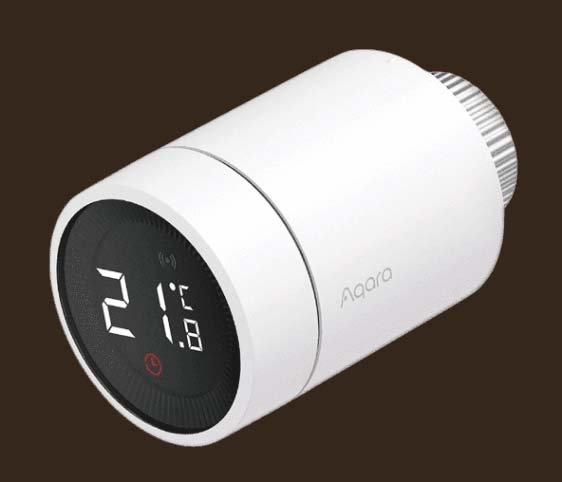
Under the hood, Zigbee 3.0 runs the show. This was a brilliant choice by Aqara, as it ensures minimal power consumption and ultra-stable communication. Unlike Wi-Fi devices, it doesn’t rely on your router and creates its own mesh network, improving range and reliability as you add more Zigbee gadgets to your home.
How It Stacks Up Against 2026 Rivals
To put the Aqara E1’s value into perspective, I’ve pitted it against some of its most direct competitors, including established classics and newer models.
| Feature | Aqara E1 | Tado° V3+ | Netatmo Smart Valve | Aqara T2 (Hypothetical Successor) |
|---|---|---|---|---|
| Protocol | Zigbee 3.0 | 6LoWPAN (868 MHz) | Long-range radio | Zigbee 3.0 & Thread |
| Hub Required | Yes (Aqara or Generic) | Yes (Tado° Bridge) | Yes (Netatmo Relay) | Yes (Aqara M3 or Generic) |
| Matter Support | Via Aqara Hub | Via Tado° Hub | Yes | Native (via Thread) |
| External Sensor | Yes (Recommended) | Yes (Accessory) | No | Yes (Native) |
| Geofencing | Via App/Hub | Yes (Paid Feature) | Yes | Via App/Hub |
| Battery | 2x AA (≈1 year) | 2x AA (≈1-2 years) | 2x AA (≈2 years) | Rechargeable USB-C |
| Est. Price (2026) | $45-60 | $70-90 | $65-85 | $75-95 |
Step-by-Step Installation Guide
Installing the Aqara E1 is a sub-5-minute job per radiator. You don’t need a plumber, just follow these steps:
- Check Your Valve Compatibility: Unscrew your current manual radiator knob. If you see a metal thread about 30mm across, you likely have the standard M30 x 1.5mm. The E1 will screw right on. If not, check the box for the right adapter (it includes adapters for Danfoss RA, RAV, and RAVL valves).
- Physical Install: Screw the Aqara E1 onto the radiator valve until it’s snug. Don’t overtighten.
- Batteries & Calibration: Pop the cover off and insert the two included AA batteries. The device will power on and begin an auto-calibration sequence, moving its internal pin to find the valve’s fully open and closed points. This takes less than a minute.
- Pairing with Your Zigbee Hub:
- With an Aqara Hub: Open the Aqara Home app, tap to add a new device, and follow the on-screen instructions.
- With Home Assistant: Go to Settings > Devices & Services. Click on your Zigbee integration (ZHA or Zigbee2MQTT) and enable pairing mode. Press and hold the E1’s button for 5 seconds until the screen flashes. Home Assistant will discover it automatically. For best performance, I recommend a powerful Zigbee coordinator like the SMLIGHT SLZB-06.
Real-World Automations to Slash Your Heating Bill
This is where the Aqara E1 truly shines. Its potential is unlocked when you pair it with other sensors to create smart automations.
1. Open Window Detection (The Right Way!)
The built-in open window detection is mediocre at best. The *real* pro move is to use an external door/window sensor. I use an Aqara Door and Window Sensor on the room’s window.
Automation:
- Trigger: When the window sensor opens.
- Action: Turn off the Aqara E1 thermostat in that room.
- Bonus: Create a second automation so that when the window closes, the thermostat returns to its previous schedule or state.
2. Pinpoint Heating with an External Temp Sensor
To combat inaccurate readings from being too close to the radiator, I place an Aqara Temperature and Humidity Sensor on the opposite wall.
Configuration (in Zigbee2MQTT or ZHA):
- In the Aqara E1’s device settings, you can select an external temperature entity as its source of truth. The thermostat will then ignore its internal sensor and work to hit the target temperature read by the external sensor, achieving perfect room comfort.
3. “Away Mode” with Geofencing
Heating an empty house is just burning money. Using our phones’ locations via the Home Assistant companion app, we can automate this completely.
Automation:
- Trigger: When the last person leaves the “Home” zone.
- Action: Set all Aqara E1 thermostats to a low-maintenance temperature (e.g., 61°F / 16°C).
- Trigger 2: When the first person enters the “Home” zone.
- Action 2: Restore the thermostats to their regular schedule.
FAQ – Your Aqara E1 Questions Answered for 2026
- Is the Aqara E1 still worth buying in 2026?
Absolutely. If you want the best bang for your buck, solid integration with open platforms like Home Assistant, and don’t need the latest bells and whistles like native Thread, the E1 is an excellent and highly cost-effective purchase. - Do I absolutely need an Aqara Hub?
No, and that’s one of its biggest strengths. While it works perfectly with Aqara’s hubs, you can pair it with any compatible USB or Ethernet Zigbee coordinator running ZHA or Zigbee2MQTT. This gives you complete, local control over your system. - Will it fit my radiator?
It’s very likely. The M30 x 1.5mm standard is extremely common. The included adapters also cover most Danfoss valves. Before you buy, just unscrew your current thermostat knob to check. - What’s the real-world battery life?
The manufacturer claims up to a year. In my experience, through a typical US Midwest winter (4-5 months of heavy use), a set of quality AA batteries lasts between 8 and 12 months. Consumption really depends on how often the motor has to make adjustments. - Does it work with Matter?
Yes, but indirectly. You need a Matter-compatible Aqara hub (like the M2 or M3) to act as a bridge, which then exposes the E1 thermostat to the Matter ecosystem. It does not have native Matter connectivity. - Will it work if the internet goes down?
Yes, if you’re using it locally with Home Assistant. All your schedules and automations will continue to run without an internet connection. If you rely on the Aqara cloud or cloud-based assistants like Alexa/Google Home, you’ll lose remote control and cloud-based automations.
What Users Are Saying About the Aqara Smart Radiator Thermostat
These user experiences, gathered over time, remain relevant and offer real-world insights into the product:
- Mike (Chicago, IL): “I loved the design of the Aqara E1, but I did have to buy a third-party adapter for my old cast iron radiator valve. Also, the battery orientation confused me at first, but once I figured it out, the device has been flawless.”
- Sarah (Boston, MA): “The valve feels high-quality, but I really wish it had an indicator to show whether it’s currently open or closed. That seems like a key detail they should add in a future version.”
- Fernando (Denver, CO): “Build quality is solid and it integrated with Home Assistant beautifully. The scheduling options are a bit basic unless you pair it with an external sensor, which I highly recommend.”
- Rachel (Philadelphia, PA): “This thing is incredible. Super easy to install and integrated perfectly with my existing smart home setup. I’m thrilled with this purchase.”
- Daniel (New York, NY): “It’s robust and reliable, though a little on the large side. The integration with Home Assistant was quick and completely hassle-free.”
- George (Seattle, WA): “Aqara never disappoints. Setup was a breeze, the device is responsive, and the overall quality is excellent for the price.”
The Verdict: The Smart Buy for Efficient Heating in 2026
The Aqara Smart Radiator Thermostat E1 has truly stood the test of time. In 2026, it stands as a mature, reliable, and incredibly cost-effective solution for anyone wanting to upgrade to zone-based smart heating. Its greatest strength isn’t cutting-edge tech, but its flawless execution of the Zigbee 3.0 standard, which gives it enviable versatility and compatibility, especially for Home Assistant users.
While more modern options with native Matter or sleeker designs exist, the E1’s price point, ease of installation, and the massive savings potential it unlocks through smart automation make it, without a doubt, the best value smart radiator thermostat of 2026. It’s a small investment for a huge return in both comfort and energy efficiency.
Continue reading
Next related guide · 8 min read
Aqara Rain Sensor in Home Assistant: Is It Still Worth Using?
This was my first rain sensor for Home Assistant. I built it using an Aqara water leak sensor and a simple resistive rain plate…
Continue with this article