
As an Amazon Associate, I earn from qualifying purchases. En calidad de Afiliado de Amazon, obtengo ingresos por las compras adscritas que cumplen los requisitos aplicables. If you buy through these links, the price is the same for you and Amazon pays me a small commission that helps keep Tecnoyfoto running.

Last updated on March 20, 2026
In 2026, micro SD cards are the unsung heroes of our digital lives. They’re the core storage for everything from drones capturing 8K video and action cams to our Nintendo Switch, Steam Deck, and countless Raspberry PiAffiliate link-based smart home projects. But few things are as infuriating as hitting the dreaded “The disk is write-protected” error. This wall stops you from deleting, modifying, or formatting the card, rendering it almost useless.
If you’re facing this dilemma—whether from a technical glitch or routine maintenance on a card with a self-protecting OS (like those for Raspberry PiAffiliate link)—you’ve come to the right place. As a tech veteran with over 15 years in the trenches, I’ll walk you through the most effective, up-to-date methods to format a write-protected micro SD card and bring it back from the dead.
Why Is My Micro SD Card Write-Protected?
Before jumping into solutions, you have to diagnose the problem. In my experience, the issue almost always boils down to one of these four culprits:
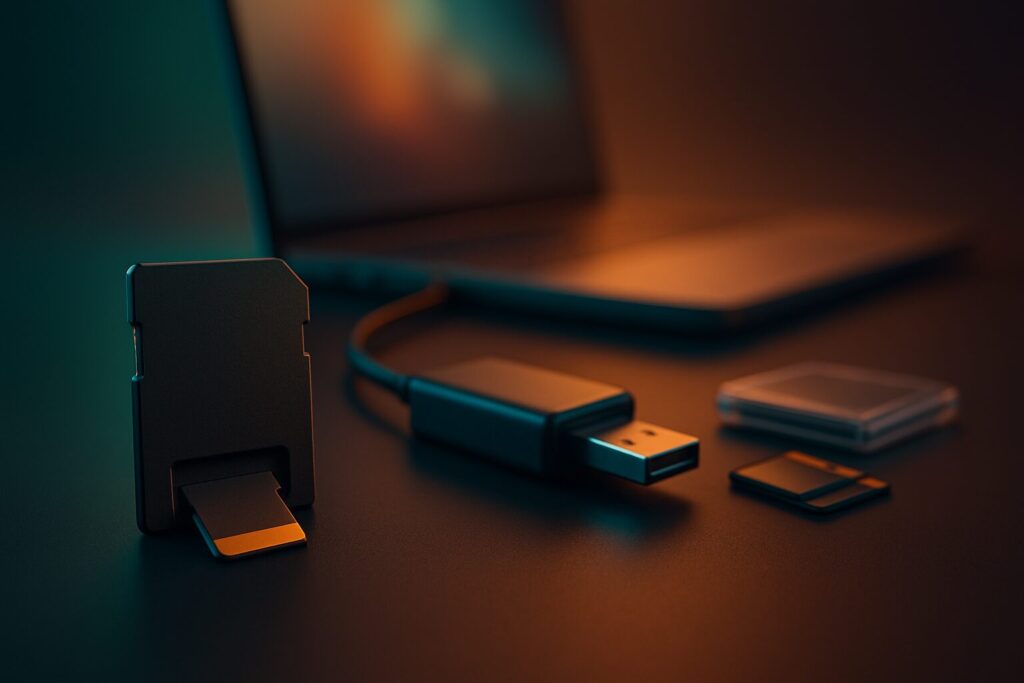
- The Physical Lock Switch: This sounds obvious, but you’d be surprised how often it’s the issue. Many full-size SD adapters have a tiny sliding tab on the side. If this tab is in the “Lock” position, the card is physically write-protected. It’s the first thing you should always check.
- File System Corruption: Abruptly yanking the card without using the “Safely Eject” option, a sudden power loss during a write operation, or logical errors can corrupt the file system. When this happens, the operating system often mounts the card as “read-only” to protect any remaining data.
- Malware Infection: While security has vastly improved by 2026, certain types of malware can lock down removable drives to prevent their own removal or to aid in their propagation.
- End-of-Life Failure: Flash memory has a finite number of write cycles. When a card is about to fail for good, its internal controller will often put it into a permanent read-only mode. This is a last-ditch effort to let you rescue your data before the card becomes completely inaccessible. If this is the case, formatting may not work.
Solution 1: Format a Write-Protected SD Card with CMD using Diskpart
This is the most powerful and reliable method for Windows users. The Diskpart command-line tool gives us low-level control over our drives, allowing it to bypass protections that File Explorer can’t touch. If you want to know how to remove write protection from a micro SD card, this is the pro-level way to do it.
Warning: This process will permanently erase all data on the card. Double-check and then triple-check that you’ve selected the correct disk to avoid formatting the wrong drive.
1. Connect your micro SD card to your computer.
2. Press the Windows key, type cmd, right-click on “Command Prompt,” and select “Run as administrator.”
3. In the console window, type diskpart and hit Enter to launch the utility.
4. Now, enter the following commands one by one, pressing Enter after each one:
list diskThis command shows you a list of all connected drives. Identify your micro SD card by its size. For example, it might be “Disk 2” with a size of 119 GB.
select disk XReplace X with the disk number for your SD card (e.g., select disk 2). This is the most critical step. Getting this wrong could wipe your main hard drive.
attributes disk clear readonlyThis is the magic command. It removes the read-only attribute that is often the source of the write-protection error.
cleanThis command erases all partition and formatting information from the disk.
create partition primaryThis creates a new primary partition that spans the entire card.
format fs=exfat quickThis formats the new partition. For 2026, my go-to recommendation is exFAT. It’s compatible with files larger than 4GB and works seamlessly across Windows, macOS, Linux, and most modern devices. The quick flag speeds up the process.
assignThis automatically assigns a drive letter (like F: or G:), making the card visible in Windows Explorer.
Once it’s done, you can type exit twice to close the command prompt. Your micro SD card should now be good as new and fully functional.
Solution 2: User-Friendly Alternatives (Third-Party Software)
If using the command line to format your SD card with CMD feels too intimidating, there are excellent GUI-based tools that simplify the process and reduce the risk of error.
- SD Memory Card Formatter: This is the official tool from the SD Association itself. Its sole purpose is to optimally format SD, micro SD, and SDXC cards, often restoring them to their original performance. It’s free, dead simple to use, and my top recommendation as the first alternative to Diskpart.
- Partition Management Tools: Software like EaseUS Partition Master, AOMEI Partition Assistant, or MiniTool Partition Wizard offer powerful free versions with robust formatting features. They provide a visual layout of your drives, giving you an extra layer of confidence that you’re formatting the correct one.
Frequently Asked Questions (FAQ) About Micro SD Formatting Errors
Here are answers to some of the most common questions I get when a micro SD card can’t be formatted.
What do I do if Diskpart gives an error on the ‘clean’ command?
This usually means the write protection is still active at a hardware or controller level. Make sure you ran the attributes disk clear readonly command right before it. If the error persists, it’s a strong indicator that the card may be physically damaged or has reached the end of its life.
Is FAT32, exFAT, or NTFS better for a micro SD card in 2026?
It depends on the use case, but here’s the definitive 2026 breakdown:
| File System | Key Advantages | Drawbacks |
| exFAT | (Recommended) Perfect for cards >32GB. No 4GB file size limit. Natively compatible with Windows, macOS, Linux, cameras, drones, and game consoles. | Lacks journaling, making it slightly less resilient to sudden power loss compared to NTFS. |
| NTFS | The most robust and secure file system, ideal for drives used exclusively with Windows PCs. | Poor cross-platform compatibility. macOS can only read it by default, and many devices (cameras, consoles) won’t recognize it at all. |
| FAT32 | Maximum compatibility with very old devices (15-20+ years old). | Essentially obsolete. Has a 4GB per-file limit, is inefficient, and prone to errors on modern high-capacity cards. |
Why isn’t my PC detecting the card at all?
If the card doesn’t even show up in the `diskpart` list or in Disk Management, the problem could be your card reader, the USB port, or a critical failure of the micro SD card’s own controller. Try a different reader or another PC first. If it’s still not detected, the card has likely died.
Can I recover data from a write-protected card?
Yes! In fact, the read-only state is a blessing in disguise for data recovery. It means you can safely copy all your important files to your computer *before* you attempt any of the formatting methods in this guide. Once your data is secure, you can proceed with the format without fear of loss.