

Last updated on August 31, 2026
LILYGO T-Zigbee: The Ultimate Review & Project Guide for 2026
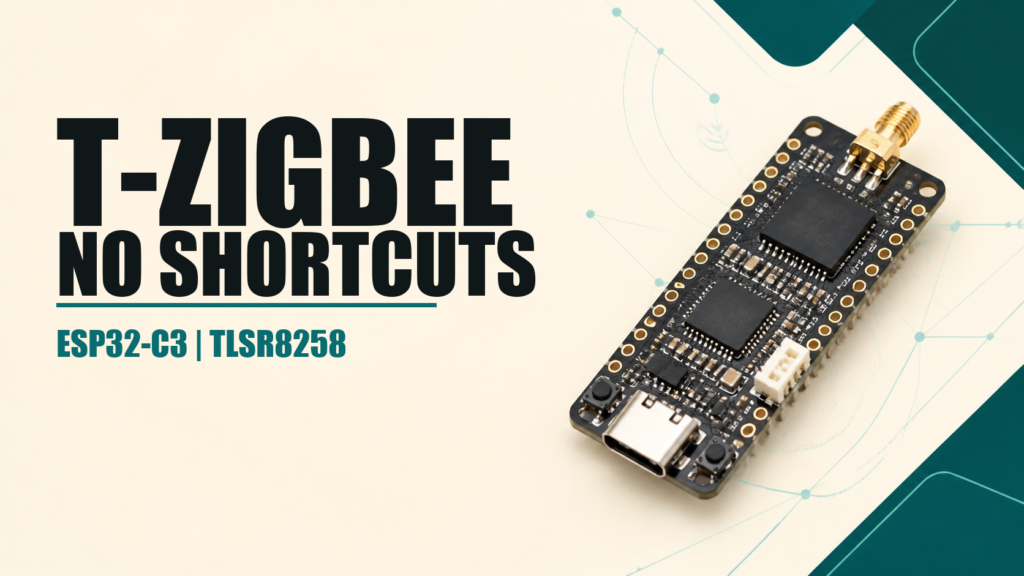
Even years after its debut, the LILYGO T-Zigbee development board is a name that still pops up in IoT forums and tinkerer circles. This LILYGO T-Zigbee review for 2026 dives deep to see if this ultra-low-cost hardware, with its quirky dual-chip architecture, still earns a spot on our workbench against more modern alternatives. We’ll explore its specs, how to flash its firmware for today’s standards, and its powerful potential for Home Assistant integration.
The board, developed by Chinese specialist LILYGO, made waves by combining a primary ESP32-C3 processor (with WiFi and Bluetooth 5.0 LE) with a Telink TLSR8258 radio co-processor, offering native Zigbee 3.0 connectivity. This dual-brain setup makes it a flexible tool, albeit a complex one by today’s standards.

Is the LILYGO T-Zigbee Still Worth It in 2026?
The short answer is: it really depends on who you are. If you’re looking for a plug-and-play solution for your smart home, there are far simpler and more powerful options out there. However, if you’re a developer, a dedicated tinkerer, or on a shoestring budget, this board still offers some unique value.
Its main advantage is the price, which typically hovers between $10 and $15 on platforms like AliExpress, though its availability can be limited in 2026. Its dual-chip architecture allows for a separation of tasks that can be incredibly useful for low-power IoT projects, where the ESP32-C3 can stay in deep sleep while the TLSR8258 manages the Zigbee or Thread network.
The primary drawback is complexity. Flashing and configuring both chips independently requires more technical know-how than, for example, using a modern board with an integrated SoC like the ESP32-C6.
Key Technical Specifications
To understand its potential, you have to know the hardware. The board is split between two main brains, each with its own PCB antenna and a U.FL connector for external antennas.
| Component | Specifications |
| Main Processor | Espressif ESP32-C3: 32-bit RISC-V core at 160 MHz, 400 kB SRAM, WiFi 4 (802.11n) and Bluetooth 5.0 Low Energy (BLE) connectivity. |
| Radio Co-processor | Telink TLSR8258: Multi-protocol radio compatible with Zigbee 3.0, Thread, 6LoWPAN, Bluetooth Mesh, and other 2.4 GHz standards. |
| Connectivity & I/O | 21 GPIO pins (shared), 4 analog inputs, UART, I2C, SPI. USB-C port for power and programming. |
| Physical Controls | Reset and User buttons, 3 programmable LEDs, and a DIP switch to change the USB’s UART link between the ESP32-C3 and the TLSR8258. |
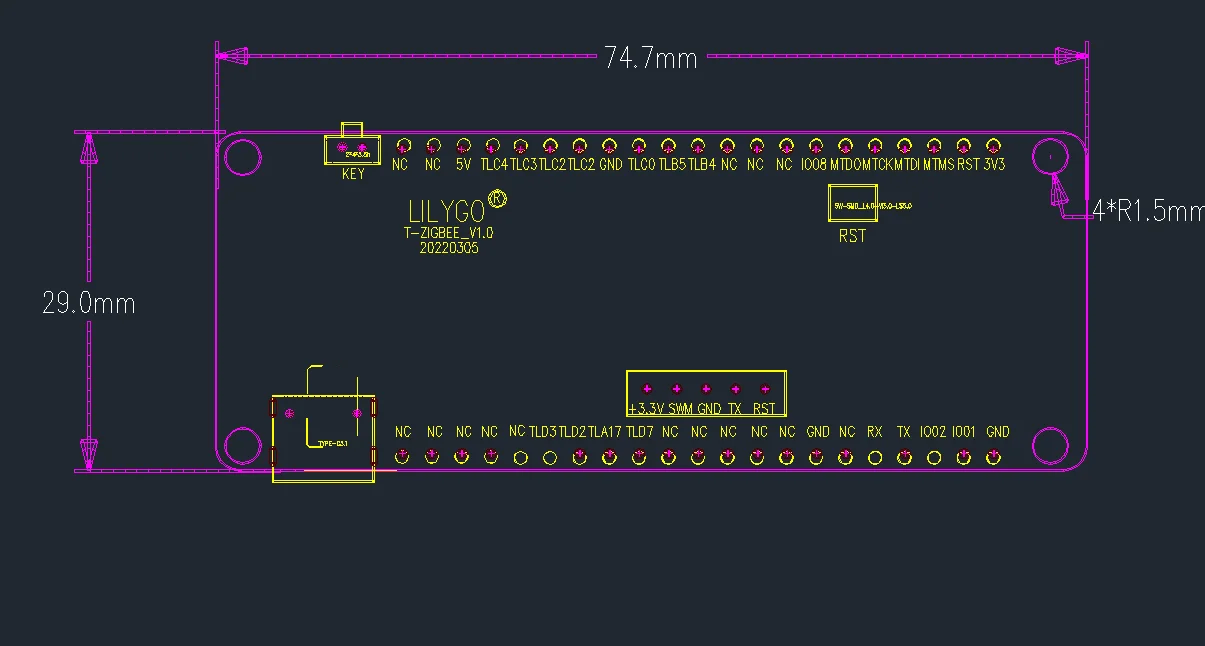
You can reference the T-Zigbee TLSR8258 and ESP32-C3 pinout for your projects below—this is vital information for any development.
Showdown: LILYGO T-Zigbee vs. 2026 Alternatives
To put this board in perspective, I’ve put together a 2026 Zigbee & Thread board comparison against today’s most popular solutions.
| Board | Pros | Cons | Best For… |
|---|---|---|---|
| LILYGO T-Zigbee | Ultra-low cost, high flexibility (two independent chips), low power consumption. | Complex to flash, slower WiFi 4, requires advanced knowledge. | Developers, firmware experimentation, projects on a minimal budget. |
| ESP32-C6 Boards | All-in-one SoC (WiFi 6, BLE, Zigbee, Thread), native support for Matter, easier to program. | Slightly higher cost, less flexibility in radio separation. | New smart home projects, Matter-compatible end devices. |
| Home Assistant SkyConnect | Seamless Home Assistant integration, official support, multi-protocol firmware (Zigbee/Thread). | More expensive, designed almost exclusively as a coordinator, less versatile for other uses. | Home Assistant users looking for a stable, hassle-free solution. |
| SMLIGHT SLZB-06 | Zigbee over Ethernet coordinator, very powerful and stable, not dependent on server location. | High cost, single-function as a network coordinator. | Large, serious smart home installations where reliability is critical. |
Firmware Flashing: Bringing the T-Zigbee into 2026
This board’s true power lies in the ability to flash custom firmware onto each of its chips to adapt it to modern standards.
Zigbee firmware: an experimental project
The TLSR8258 supports Zigbee, but turning this board into a Home Assistant coordinator is not an official workflow or the same as buying a supported adapter. It depends on community firmware and tools, the correct boot mode, and whether ZHA or Zigbee2MQTT recognizes the resulting interface. Compatibility can change between releases.
If you want to experiment, keep a copy of the original firmware, consult the official LILYGO repository, and verify the current community project status before flashing. Use a purpose-built supported coordinator for a dependable home network.
Matter Firmware for the ESP32-C3
While the ESP32-C3 doesn’t have a native Thread radio, it is fully compatible with Matter-over-WiFi. You can load an official ESP32-C3 Matter firmware from Espressif to create your own smart devices (a plug, a sensor, a light) that integrate perfectly into the 2026 Matter ecosystem. This opens up a world of possibilities for creating custom devices that work natively with Apple Home, Google Home, or Amazon Alexa.
Practical Home Assistant Projects
The T-Zigbee’s versatility makes it ideal for several DIY smart home projects. Here are two ideas to get you started:
1. Zigbee firmware laboratory
The T-Zigbee is useful for studying communication between the ESP32-C3 and TLSR8258, testing manufacturer examples, and evaluating community firmware. Treat it as a development platform: do not migrate an important Zigbee network until pairing, stability, backup, and recovery have been tested.
2. WiFi node with ESPHome
You can also use the ESP32-C3 as an ESPHome node and connect sensors to the available GPIO pins. The ESP32-C3 sends data to Home Assistant over WiFi; simultaneous use of the TLSR8258 requires specific firmware and must not be assumed.
The Verdict: Who is the LILYGO T-Zigbee For in 2026?
In 2026, the LILYGO T-Zigbee is not a board for beginners. Its learning curve is steeper than that of modern, integrated solutions. However, for the developer, student, or advanced hobbyist looking to experiment with Zigbee or Thread firmware or create custom Matter-over-WiFi devices, it remains an incredibly affordable and powerful tool.
If your goal is simply to set up a stable Zigbee network for Home Assistant with minimal effort, I’d recommend investing in a dedicated coordinator like the Home Assistant SkyConnect or an Ethernet model. But if you’re passionate about understanding how these protocols work and want a Swiss Army knife for your low-power IoT projects, the T-Zigbee still has a lot to offer.
Follow me on YouTube

Continue reading
Next related guide · 8 min read
ESPHome WiFi: Secure Setup, Roaming and Troubleshooting (2026)
Updated August 5, 2026 for ESPHome 2026.7.3. ESPHome WiFi connects an ESP32 or ESP8266 to your network so it can communicate with Home Assistant,…
Continue with this article