
As an Amazon Associate, I earn from qualifying purchases. En calidad de Afiliado de Amazon, obtengo ingresos por las compras adscritas que cumplen los requisitos aplicables. If you buy through these links, the price is the same for you and Amazon pays me a small commission that helps keep Tecnoyfoto running.

Updated on January 29, 2026
Fire TV Cube (2nd Gen) Review 2026: A Retro Streaming Steal?
Years after its launch, the Amazon Fire TV CubeAffiliate link (2nd Generation) is a streaming device that keeps popping up on the used market, sparking curiosity. In its heyday, it was the pinnacle of Amazon’s lineup, merging a powerful 4K player with a hands-free Echo smart speaker. Today, in 2026, we’re looking at it from a new angle: as a veteran device you can snag for a bargain. Is it still worth buying over modern alternatives? As a long-time tech reviewer, I’ve dusted off my unit and put it back through its paces to give you the definitive answer.
Is the Fire TV Cube 2nd Gen Worth It in 2026?
Let’s cut to the chase: yes, but with some major caveats. The 2nd Gen Fire TV CubeAffiliate link is no longer competing with new, high-end streaming boxes. Its main appeal in 2026 is its rock-bottom price on the second-hand market, typically landing between $40 and $60. For that price, you’re getting two highly functional devices in one.
You should buy it for:
- Hands-Free Alexa Voice Control: This remains its killer feature and something today’s Fire TV Sticks don’t offer. Being able to say “Alexa, play the latest on Netflix” or “Alexa, turn off the TV” without reaching for a remote is a convenience many modern budget devices lack.
- Solid 4K Performance: Despite its age, the processor handles 4K content with Dolby Vision and Dolby Atmos audio without breaking a sweat. For video streaming, it still absolutely delivers.
- Wired Connectivity: It includes an Ethernet adapter, which is crucial for stable 4K streaming if your Wi-Fi is spotty. Many budget streamers skip this essential feature.
You should NOT buy it if:
- You need top-tier performance for gaming or demanding apps.
- You want Wi-Fi 6E or the latest connectivity standards.
- You need a device that will receive all the newest Fire OS feature updates.
In short, for a secondary TV, for users who prize voice control above all else, or as a first 4K player on a shoestring budget, it’s a brilliant purchase. For your main home theater setup, you’ll probably want to invest in its bigger brother, the 3rd Gen Cube, or other modern alternatives.
Fire TV Cube (2nd Gen) Features: A 2026 Deep Dive
Design and Hardware: A Veteran That Still Holds Up
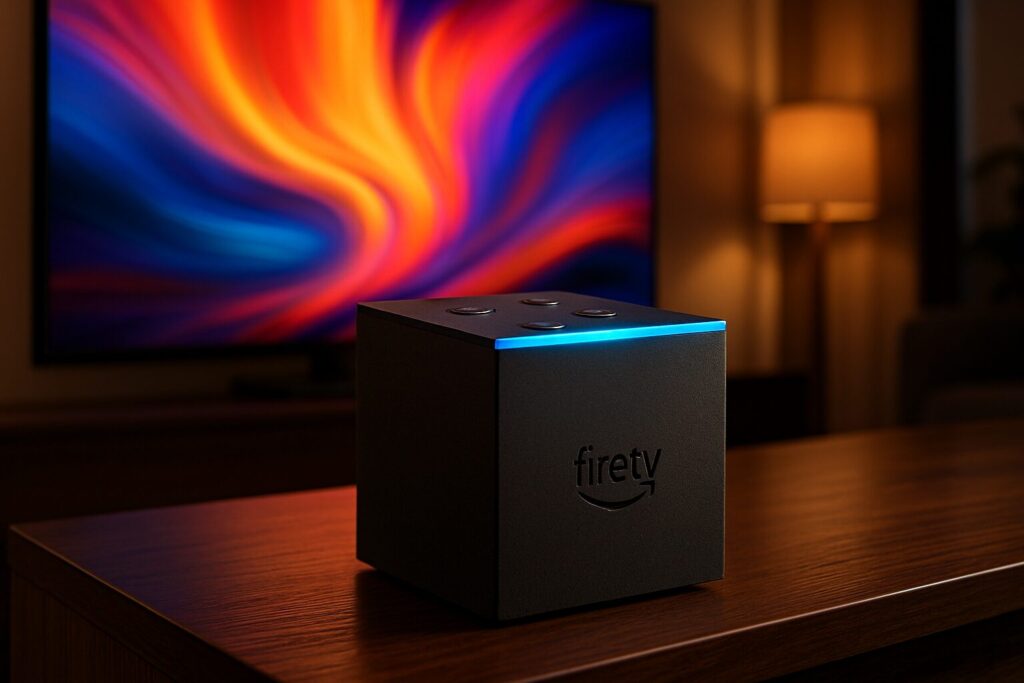
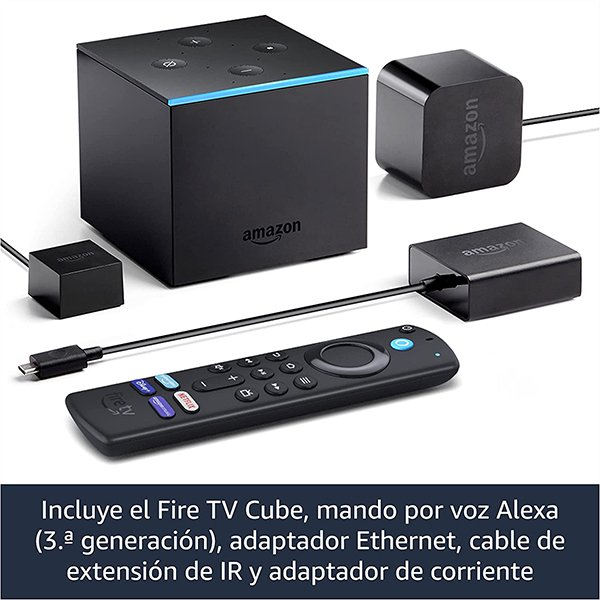
The 2nd Gen Fire TV CubeAffiliate link’s design is still a discreet, glossy black cube. Unlike sticks that hide behind your TV, this device is meant to be seen and heard, as it houses eight far-field microphones to pick up your voice commands from anywhere in the room. In my re-testing, the voice pickup is still excellent, on par with many modern Echo speakers. The top features physical buttons for volume, mic mute, and activating Alexa.
Under the hood, the Hexa-Core processor (Amlogic S922Z) and 2 GB of RAM are sufficient for smooth UI navigation and video playback. However, you can feel its age when juggling multiple heavy apps or navigating at high speed. The 16 GB of storage is adequate, but if you plan on sideloading lots of apps or running heavier sideloaded apps, you might need to manage it carefully.
On the back, you’ll find an HDMI port, an IR extender port, the power connector, and a micro-USB port that becomes a 100 Mbps Ethernet port with the included adapter. Its ability to control other gear like your TV and soundbar via HDMI-CEC and IR is still a massive plus, centralizing your entire living room control.
Audio and Video Quality: Still Relevant Where It Counts
This is where the 2nd Gen Fire TV Cube has aged surprisingly well. It supports the specs that matter most:
- 4K Ultra HD at 60 fps: The standard for any quality content.
- Dolby Vision and HDR10+: The two most important dynamic HDR formats, ensuring spectacular picture quality on compatible TVs.
- Dolby Atmos: For immersive, three-dimensional sound if you have a compatible audio system.
The picture quality is fantastic. 4K HDR content looks vibrant and sharp. The upscaling of 1080p content to 4K is decent, though not as advanced as what you’d find on newer, more powerful processors from competitors.
Fire TV Cube 2nd Gen vs. 3rd Gen & Today’s Competition
To put the differences between the Fire TV Cube 2nd Gen and its 3rd Gen successor (and other 2026 rivals) into perspective, I’ve put together this comparison chart. It clearly highlights its strengths and weaknesses.
| Feature | Fire TV Cube 2nd Gen (2019) | Fire TV Cube 3rd Gen (2022) | Apple TV 4K (2025) |
|---|---|---|---|
| Processor | Hexa-core Amlogic S922Z | Octa-core Amlogic POP1 | A17 Bionic Chip |
| RAM | 2 GB | 2 GB | 6 GB |
| Wi-Fi | Wi-Fi 5 (802.11ac) | Wi-Fi 6E | Wi-Fi 6E |
| Ports | HDMI 2.0, Micro-USB (for Ethernet) | HDMI 2.1 (Input & Output), USB-A | HDMI 2.1, Ethernet |
| Killer Feature | Hands-free Alexa at a low price | More power, Wi-Fi 6E, HDMI-In | Extreme power, Apple ecosystem |
Software and User Experience in 2026
The 2nd Gen Fire TV Cube runs on Fire OS, Amazon’s customized version of Android. By 2026, it’s unlikely to get the major new interface overhauls Amazon rolls out for its latest hardware, but it will continue to receive security patches and updates for major apps. The user experience remains the same: an interface heavily focused on Amazon Prime Video content.
While the home screen heavily promotes Amazon’s own content, you have full access to every streaming app you’d expect: Netflix, Max, Disney+, YouTube, and so on. Navigation is snappy, and apps open without excessive delays. And if you’re wondering how to watch live TV, it integrates smoothly with services like Sling TV, YouTube TV, or even your own over-the-air channels via a network tuner.
The integration with the Amazon ecosystem is seamless. You can ask Alexa to show your security camera feeds, control smart lights, or give you the weather, with visual feedback appearing on your TV. This role as a “smart home brain” is, without a doubt, its biggest remaining advantage.
Frequently Asked Questions (FAQ) about the Fire TV Cube 2nd Gen in 2026
- Does it still get software updates in 2026?
- It receives security and app updates, but it’s unlikely to get major new versions of Fire OS. Its core functionality is secure and stable.
- Can it play 8K content?
- No, its maximum resolution is 4K. 8K content is still a niche market in 2026 and requires much more powerful and expensive hardware.
- Do I need an Amazon Echo to use voice control?
- No. That’s its greatest strength. The Fire TV Cube has the microphones and Alexa processing built-in, so it acts as both an Echo and a Fire TV in a single device.
- Is it better than a new Fire TV Stick 4K Max?
- It depends on what you value. A brand new 4K Max from 2025 or 2026 will be faster, have better Wi-Fi (likely 6E), and run a more modern UI. However, the 2nd Gen Cube offers hands-free voice control and wired Ethernet connectivity—features the Sticks don’t have. If those two things are important to you, the Cube is arguably a better choice, especially at its used market price.
Conclusion: A Classic That Refuses to Quit
The 2nd Generation Fire TV Cube is the definition of a device that has aged gracefully. In 2026, it’s no longer the king of performance, but it has repositioned itself as one of the best-value and most feature-complete options on the second-hand market. The combination of a competent 4K HDR streamer and a hands-free Alexa smart speaker for less than the cost of a basic smart speaker is a value proposition that’s tough to ignore.
If you’re looking for a cheap solution for a second TV, want to add voice control to your living room without buying two gadgets, or just need a reliable 4K streamer without breaking the bank, this old cube is still a masterstroke of a purchase. It’s proof that great hardware and software design can endure long after a product’s initial retail cycle ends.
Subscribe on YouTube!

Continue reading
Next related guide · 8 min read
The Ultimate Fire TV Cube Setup Guide for 2026: From Unboxing to Smart Home Master
Last Updated: March 14, 2026 Welcome to the definitive guide to your Fire TV Cube setup in 2026. As a tech blogger and A/V…
Continue with this article