

Last updated on January 27, 2026
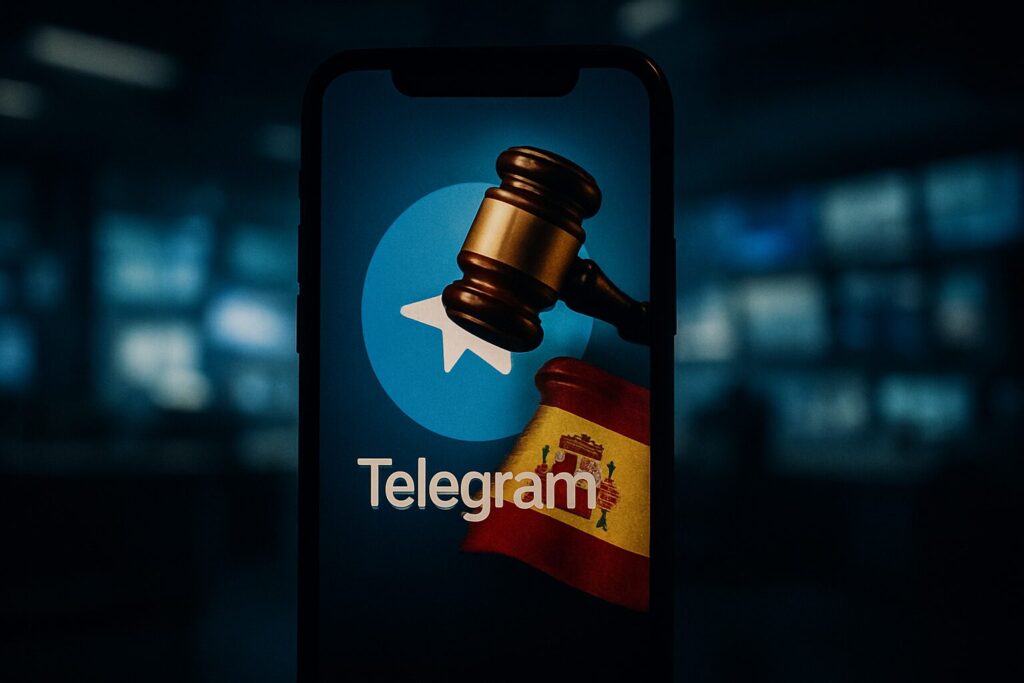
The landmark Telegram Spain ban case in March 2024 was a defining moment in the country’s debate on digital freedom, copyright, and platform regulation. What started as a precautionary measure requested by major media corporations quickly spiraled into an intense national firestorm, setting a critical precedent. Today, in 2026, we’re taking a look back at what happened, the final resolution, and the lasting consequences of this pivotal case.
The Telegram Spain Ban: A Timeline of the 72 Hours That Shook the Internet
To grasp the scale of this event, it’s essential to remember the key moments that unfolded over one frantic weekend in 2024. The case, handled by Spain’s National High Court, moved at a blistering pace.
Here’s a summary table I’ve put together with a detailed timeline of the events:
| Date (2024) | Key Event |
|---|---|
| Thursday, March 21 | Media giants Mediaset, Atresmedia, and Movistar Plus, along with the rights management group EGEDA, file a complaint with the National High Court. They accuse Telegram of hosting and enabling the unauthorized distribution of copyrighted content. |
| Friday, March 22 | Judge Santiago Pedraz issues a shocking order for the immediate, precautionary blocking of Telegram nationwide. He gives telecom operators a three-hour deadline to enforce the ban. The news triggers a massive backlash on social media and in the press. |
| Saturday, March 23 | The ban is not yet effective. Legal experts, consumer associations, and thousands of users slam the measure as “disproportionate,” arguing it punishes millions for the illicit activities of a few. The debate is framed by a powerful analogy: is it right to “shut down an entire bar because one table is dealing drugs?” |
| Monday, March 25 | In a stunning reversal, Judge Pedraz suspends his own blocking order. He requests a report from the National Police’s General Information Office on Telegram’s characteristics and the potential impact of the ban on its users. |
| April – July 2024 | After analyzing the police report and legal arguments—which highlighted the massive disruption to legitimate communications for businesses, groups, and citizens—the National High Court dismisses the case. The court concludes the block would be an excessive and inappropriate measure. |
The Final Verdict: Why Proportionality Won in the Telegram Spain Ban Case
The final ruling in the Telegram Spain ban case wasn’t a conviction but a dismissal. When Judge Pedraz reviewed the expert police report, he confirmed what the digital community had been shouting from the rooftops: completely blocking a platform with over 8 million users in Spain to chase down copyright infringement was a disproportionate measure that clashed with fundamental rights.
From a technical standpoint, the analysis proved that Telegram is far more than a simple file-sharing channel. It’s a vital communication tool for businesses, an information source for journalists and activists, and a community platform for countless groups. The impact of a total shutdown would have been massive and unjustified.
The Aftermath: Legal Precedent and Lasting Impact
The failed attempt to block Telegram set a crucial legal precedent. It showed that Spanish courts, when weighing different rights, cannot sacrifice the freedom of communication and information for millions to protect the intellectual property interests of a few—especially when more targeted methods to pursue crime exist.
One of the most significant consequences of the foiled Telegram ban was how the case influenced the country’s implementation of new European regulations. Spain’s Digital Services Act (DSA), which has been fully rolled out between 2025 and 2026, now emphasizes the responsibility of large platforms to proactively moderate and remove illegal content, rather than resorting to heavy-handed, network-level blocks by ISPs.
The 2024 showdown served as a real-world stress test, proving that simplistic solutions like blanket bans are both ineffective and counterproductive in today’s digital ecosystem.
Could It Happen Again? How to Prepare for Future Service Blocks in 2026
Although the precedent from the Telegram case makes a similar massive block less likely in 2026, the possibility of targeted blocks against specific websites or services always exists. Cybersecurity and unrestricted access to information remain key concerns for many users.
For those worried about privacy and maintaining access to information, powerful technical tools are available. Solutions like changing your DNS settings or using a reputable Virtual Private Network (VPN) remain the gold standard for bypassing such restrictions and securing your digital footprint.
Conclusion: A Crucial Lesson for the Digital Age
In retrospect, the Telegram Spain ban case was more than just a legal footnote. It was a crash course in the complexities of regulating the internet. It exposed the absolute need for proportional measures, for understanding the technology behind platforms before acting, and above all, for protecting the digital rights of citizens. The National High Court’s decision not to block Telegram is remembered today as a victory for a more open and free internet in Spain.
Continue reading

Next related guide · 8 min read
Telegram Blocked in 2026? Here’s How to Unblock It With a Proxy
Last updated on March 20, 2026 In 2026, the fight for free and uncensored communication is more critical than ever. With governments and ISPs…
Continue with this article