

Last updated on April 11, 2026
The Zigbee smart breaker has cemented its place as a cornerstone of modern smart home automation. Here in 2026, it’s no longer just a niche gadget for tinkerers; it’s a strategic component for energy management, security, and next-level convenience. As an IoT Engineer who’s been in the trenches with these devices for years, I’ve seen them evolve firsthand. In this definitive guide, I’ll show you how a Zigbee smart breaker can completely transform your home’s command center, based on my hands-on experience.
What is a Zigbee Smart Breaker, and Why Do You Need One in 2026?
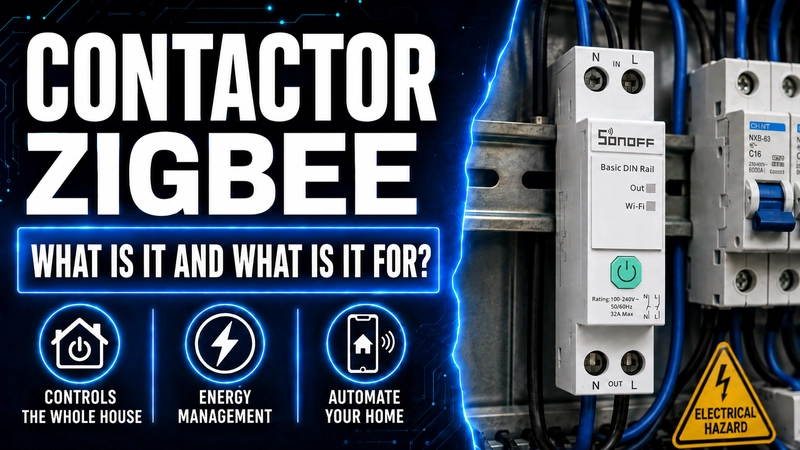
In a nutshell, a Zigbee smart breaker is a high-power Zigbee switch engineered to be installed directly into your home’s main electrical panel (breaker box). Unlike a smart plug or an in-wall relay that controls a single appliance, a smart breaker can manage the power for your entire house or for specific high-load circuits (like all your lighting, outlets, or the water heater line).
Its core function is to give you total remote control over your home’s main power feed. This unlocks a whole new level of automation that’s more relevant than ever in 2026:
- Presence Simulation: Kill the power to everything non-essential when you leave home, and randomly toggle lights while you’re on vacation to make it look like someone’s there.
- Emergency Power Cut-Off: If a leak detector or smoke alarm is triggered, you can automatically cut the main power to prevent electrical fires or further damage. It’s a massive safety upgrade.
- Peak Demand Management: Automatically shut down non-critical circuits (like a pool pump or EV charger) during peak energy-rate hours to slash your utility bill.
- Remote Hard Reboot: Is the router, server, or any other critical gear frozen? A quick power cycle from your phone solves it, no matter where you are.

The Best Zigbee Smart Breakers of 2026: A Head-to-Head Comparison
The market has finally matured. A few years ago, we were stuck with generic, no-name models. Now in 2026, we have a solid lineup of devices for different needs and budgets. Here’s a breakdown of the types of smart breakers you’ll find on the market today.
| Model / Tier | Max Current | Energy Monitoring | Built-in Protections | Estimated Price Range (2026) |
|---|---|---|---|---|
| EARU / Generic (Entry-Level) | Up to 63A | Yes (on specific models) | None (Requires separate breaker) | $15 – $30 |
| SONOFF ZB-Contactor Pro | Up to 80A | Yes (Improved accuracy) | Over-Voltage Protection (OVP) | $45 – $60 |
| Schneider Electric Wiser (Square D) | Up to 63A | Yes (Professionally calibrated) | Over-voltage, over-current, short-circuit (All-in-one) | $90 – $120 |
| Aqara Smart Breaker T2 | Up to 63A | Yes (with detailed history) | Configurable temperature and over-current protection | $70 – $95 |
My take is pretty straightforward: if you’re on a tight budget and just need basic on/off control, the generic models are still a viable option. However, for a serious and safe installation, investing in a reputable brand like Schneider (known as Square D in the US) or Aqara is the smartest long-term decision. The integrated safety protections alone are worth the premium.
Integrating with Home Assistant: ZHA vs. Zigbee2MQTT
The true power of a Zigbee smart breaker is unlocked when you pair it with a local smart home hub like Home Assistant. Luckily, compatibility in 2026 is excellent, with seamless support for both major Zigbee integrations.
To get started, you’ll need a solid Zigbee coordinator. I personally recommend an Ethernet-based model like the SMLIGHT SLZB-06 for its superior stability and range.
- With ZHA (Zigbee Home Automation): This is the fast, out-of-the-box solution. As I cover in my guide to advanced Zigbee setups, pairing is almost automatic. Home Assistant discovers the breaker, exposes it as a switch, and, if the model supports it, adds all the energy monitoring sensors. It’s perfect for users who want simplicity.
- With Zigbee2MQTT: This is for the power users who want maximum control. Zigbee2MQTT, installed via the Home Assistant Add-on Store, typically exposes more entities and configuration options for each device. It allows for fine-tuning and, in my experience, offers broader compatibility with more obscure devices.
Safety & Security: The Critical Stuff You Must Know Before Installing
Let’s be crystal clear: installing a device that controls your entire home’s electricity is not a DIY weekend project. It is crucial to understand the associated physical and digital risks.
Physical Safety Risks
This installation MUST be performed by a licensed and qualified electrician. You’re working inside the main breaker panel, a place that can be deadly without the proper knowledge and precautions. It’s also vital to understand that most budget-friendly smart breakers do not include over-current or short-circuit protection. They must always be installed downstream from a properly rated circuit breaker (OCPD) that protects the line, in accordance with the National Electrical Code (NEC).
Cybersecurity Risks
A hacked smart breaker could cut power to your home or, worse, cause damage to your appliances through rapid power cycling. To mitigate the cybersecurity risks on your home network, follow these best practices:
- Secure Your Zigbee Network: Use a complex network key and ensure your Zigbee coordinator firmware is always up-to-date.
- Keep Your Systems Patched: Home Assistant and Zigbee2MQTT receive constant security updates. Do not ignore those update notifications.
- Beware the Cloud: If you use your breaker with a cloud-based ecosystem like Tuya / Smart Life, you are at the mercy of their servers and their security practices. We’ve seen vulnerabilities on these platforms before, which reinforces the argument for local control systems like Home Assistant.
The Verdict: Is a Zigbee Smart Breaker Worth It in 2026?
The short answer? Absolutely. The Zigbee smart breaker has graduated from a hobbyist gadget to an essential management and safety tool for any advanced smart home. The ability to remotely and automatically control the main power feed provides a level of control that no other single device can match.
While the more basic models lack integrated protections and the installation absolutely requires a professional, the balance of functionality, price, and the sheer potential it unlocks for home automation makes it a highly recommended investment. If you’re serious about your smart home, a Zigbee smart breaker should be one of the first components you consider for your electrical panel.