
This article may contain affiliate links. If you buy through these links, the price is the same for you and the store pays me a small commission that helps keep Tecnoyfoto running.

Last updated on February 25, 2026
In the fast-paced world of smart homes, few gadgets manage to stay relevant for years on end. Yet here we are in 2026, and we’re putting a budget classic back under the microscope: the Sonoff temperature and humidity sensor. This Sonoff SNZB-02PAffiliate link Review for 2026 breaks down not just its features, but its real-world value in a mature ecosystem dominated by Home Assistant, and pits it against modern standards like Matter and Thread.
This little sensor, which has earned a permanent spot in thousands of smart homes, remains an incredibly popular choice for its dead-simple setup and, most importantly, its rock-bottom price. You can usually find it on the official ITEAD storeAffiliate link for around $10-$12.
Exclusive Reader Deal! Use coupon code TECNOYFOTO at the official Sonoff store to get 10% off your purchase. A perfect chance to snag this sensor for even less.
Sonoff SNZB-02P: 2026 Key Specs Breakdown
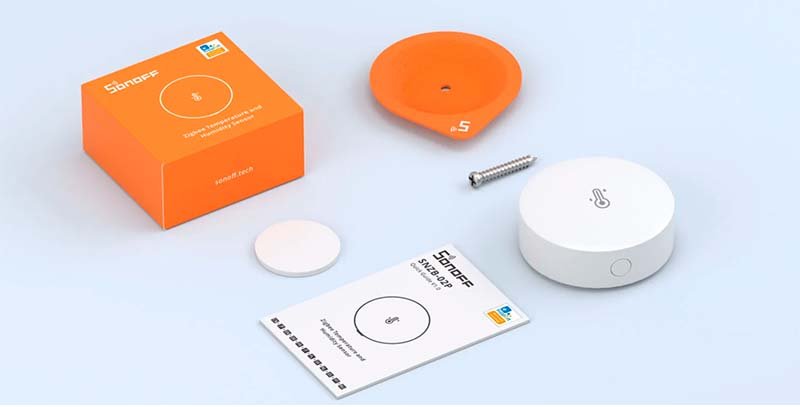
While the external design hasn’t changed, its specs are still highly competitive in 2026. The most impressive features are its reliability and the incredible CR2477 battery life, which in my testing easily surpasses two years under normal conditions. Here’s an updated look at its technical specifications:
| Feature | Specification |
|---|---|
| Brand | Sonoff |
| Model | SNZB-02P |
| Protocol | Zigbee 3.0 |
| Sensor | Swiss-made, high-precision |
| Temperature Accuracy | ±0.2°C (±0.36°F) |
| Humidity Accuracy | ±2% RH |
| Battery Model | CR2477 (3V) |
| Est. Battery Life | 2-4 years (reporting every 5 mins) |
| Operating Temperature | -10°C to 60°C (14°F to 140°F) |
| Operating Humidity | 5% to 95% RH (non-condensing) |
| Material | PC V0 |
| Dimensions | 45x45x17.7 mm (1.77 x 1.77 x 0.7 in) |
| Weight | 27g (0.95 oz) |
| Mounting | 3M adhesive (included), magnetic base |
Home Assistant Integration: The Perfect Match
This is where the SNZB-02P truly shines and why it remains my top recommendation for budget-friendly environmental monitoring. Forget the eWeLink app; its real power is unleashed when you connect it to a robust Zigbee coordinator, like a Zigbee Ethernet Coordinator, and manage everything through Home Assistant. The Home Assistant integration is, quite simply, flawless.
You have two main paths to get it running:
1. Using Zigbee2MQTT (Z2M)
My preferred method. Zigbee2MQTT offers granular control over every device. After putting the sensor in pairing mode (press and hold its button for 5 seconds), Z2M recognizes it instantly. It will expose the following entities in Home Assistant:
- sensor.snzb02p_temperature: The current temperature.
- sensor.snzb02p_humidity: The relative humidity.
- sensor.snzb02p_battery: The remaining battery percentage.
- sensor.snzb02p_linkquality: The Zigbee signal quality (LQI), which is crucial for diagnosing network issues.
2. Using ZHA (Zigbee Home Automation)
For those who prefer a simpler, native solution built right into Home Assistant, ZHA is the ideal choice. The process is just as easy: enable device discovery in the ZHA integration, put the sensor in pairing mode, and Home Assistant handles the rest. The created entities are nearly identical, and it works just as reliably.
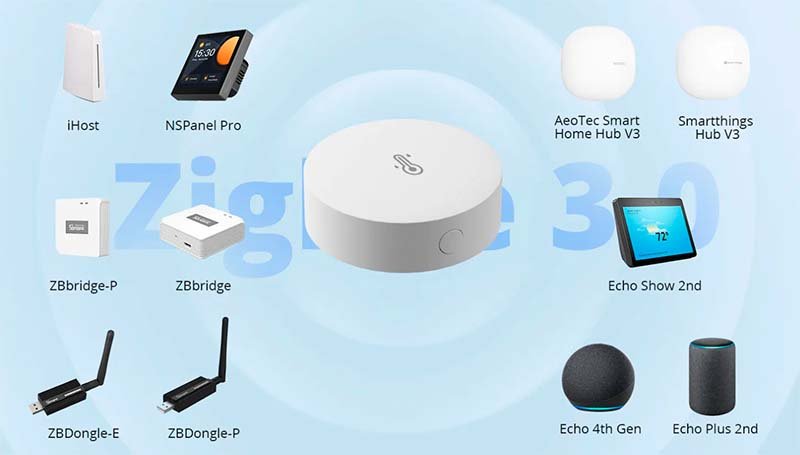
The 2026 Debate: Zigbee 3.0 vs. Thread & Matter Compatibility
In 2026, the protocol conversation is unavoidable. Does a Zigbee-only device still make sense now that Matter and Thread are well-established? The answer is a resounding yes.
- Zigbee 3.0 vs. Thread: While Thread promises native IP-based communication, Zigbee networks like the one this sensor uses have proven to be incredibly robust and energy-efficient. For a battery-powered device that only needs to send small packets of data sporadically, the maturity and stability of Zigbee remain a powerful advantage.
- Matter Compatibility: The Sonoff SNZB-02PAffiliate link has not received a firmware update for native Matter-over-Zigbee compatibility. However, this is completely irrelevant if you use Home Assistant. Home Assistant acts as a bridge, exposing this and any other Zigbee device to your Matter ecosystem. This means you can ask an Apple HomePod or a Google Nest Hub for the temperature, even though the sensor itself doesn’t speak Matter.
In short, its Zigbee nature isn’t a drawback; it’s an advantage in terms of cost and reliability when used within a centralized hub like Home Assistant.
Advanced Automations in Home Assistant
With the data from the SNZB-02P, the possibilities are endless. Here are a few practical examples I have running in my own home:
- Bathroom Humidity Control: An automation that turns on the bathroom exhaust fan when humidity spikes more than 15% above the house average (e.g., during a shower) and turns it off when levels return to normal.
- Thermal Comfort Management: Automatically turns on a standing fan if a room’s temperature exceeds 26°C (about 79°F) in the summer.
- Mold Prevention: I use a template sensor in Home Assistant to calculate the dew point. If the surface temperature of a known cold wall gets too close to the dew point calculated using the SNZB-02P’s data, I get a notification to ventilate the room.
Here’s a sample YAML for a simple fan automation:
alias: 'Office Fan ON when Hot'
description: 'Turns on the fan if the temperature exceeds 26 degrees Celsius'
trigger:
  - platform: numeric_state
    entity_id: sensor.snzb02p_office_temperature
    above: 26
condition:
  - condition: state
    entity_id: switch.fan_smart_plug
    state: 'off'
action:
  - service: switch.turn_on
    target:
      entity_id: switch.fan_smart_plug
mode: single
Sonoff SNZB-02P vs. The Competition (2026 Showdown)
How does the SNZB-02P stack up against its direct competitors in 2026?
| Feature | Sonoff SNZB-02PAffiliate link | Aqara T1 Temp & Humidity | Tuya Zigbee Sensor (Generic) |
|---|---|---|---|
| Protocol | Zigbee 3.0 | Zigbee 3.0 | Zigbee 3.0 |
| Temp. Accuracy | ±0.2°C (Excellent) | ±0.3°C (Very Good) | ±0.5°C (Acceptable) |
| Battery | CR2477 (~2-4 years) | CR2032 (~2 years) | CR2450 (~1-2 years) |
| Approx. Price | ~$10-$12 | ~$20-$25 | ~$8-$10 |
| Extras | None | Barometric pressure sensor | Varies by manufacturer |
| My Take | The undisputed value king. Excellent accuracy and battery life. | Pricier, but adds pressure data. Rock-solid reliability. | The absolute cheapest option, but you sacrifice some accuracy and battery life. |
Final Verdict: Is the Sonoff SNZB-02P Still a Buy in 2026?
Years after its launch, the Sonoff SNZB-02P remains a masterstroke purchase for any Home Assistant user. Its temperature and humidity sensor accuracy is more than sufficient for the vast majority of home automations, its reliability is rock-solid, and its battery life is simply exceptional.
While it doesn’t offer native Matter support or extras like a barometer, its low cost and flawless integration into local-first systems like ZHA or Zigbee2MQTT make it the ideal workhorse sensor. If you’re looking to monitor your home’s environment reliably and affordably without relying on third-party clouds, the SNZB-02P is, even in 2026, one of the best options you can buy.
Working with 110V/240V household electrical wiring can be extremely dangerous and poses a risk of serious injury or death. If you are not qualified or comfortable with this type of work, always consult a licensed electrician. The information provided on this website is for educational purposes only and is based on my own experience; you are solely responsible for any modifications you make to your own electrical systems.